
Own a holiday home in Saas-Fee?
Buying an apartment or chalet in Saas-Fee to let it
Lex Weber, Lex Koller, the constraints of a pedestrian village, sectors and a season stretched by the glacier: what to check before making an offer in the Pearl of the Alps.
Local team on the ground in Saas-Fee · Response within 24 hours
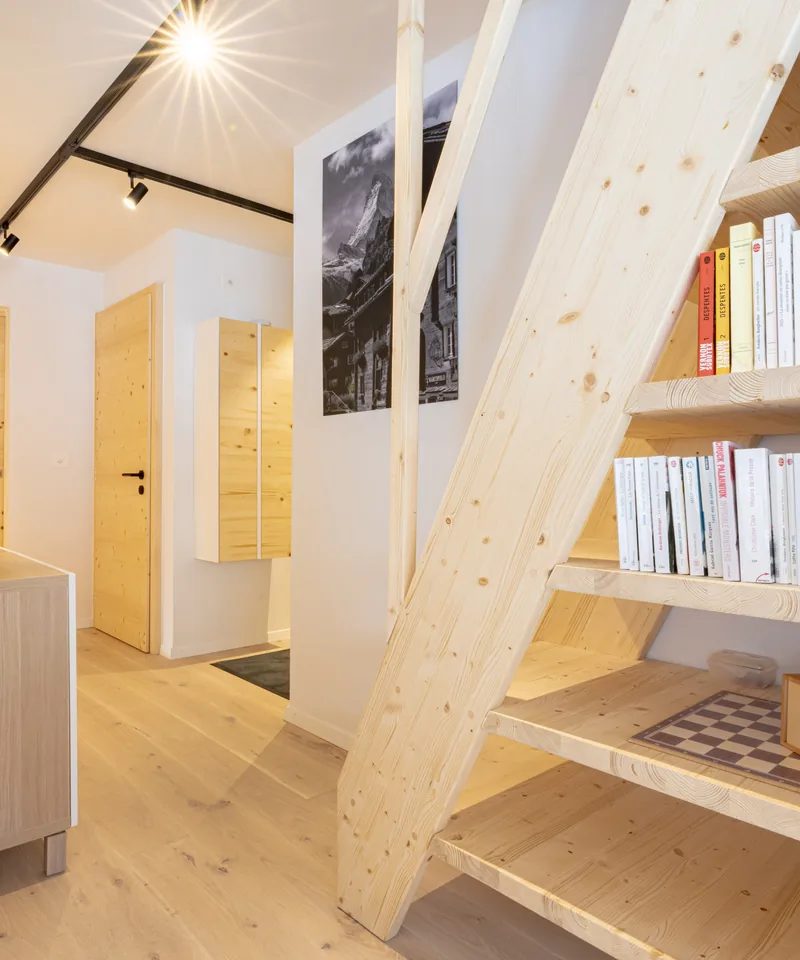
01A rare market: pedestrian village, frozen supply, stretched season
Saas-Fee occupies a singular position in the Swiss alpine landscape, and that singularity is what makes a buy-to-let project both interesting and demanding. The village is entirely pedestrian, set against a glacial cirque dominated by the Dom and the Allalinhorn, surrounded by an exceptional concentration of peaks above 4,000 metres. It has a summer ski area on the glacier, one of the few in Europe, and high-altitude infrastructure such as the Metro Alpin and the revolving restaurant. All of it within a built perimeter constrained by the topography.
For an investor these are not picture-postcard details: they are yield parameters. The pedestrian character and the narrowness of the site structurally limit supply. Lex Weber has also frozen the creation of new "classic" second homes since 2013. And the stretched season - winter, summer skiing, an autumn of hiking and mountaineering - allows a distribution of overnight stays that few Valais resorts can offer.
The competitive context, however, is that of a resort with a very high proportion of second homes, many of which are let only irregularly and without professional organisation. That is both the opportunity - properties change hands regularly, and many owners do not operate their home - and the backdrop against which your property will have to stand out. Differentiation is not about prestige: it is about consistency of operation.
02Lex Weber when buying: the check that comes before everything else
Lex Weber has frozen the construction of new "classic" second homes since 2013 in municipalities above the 20% threshold - which is the case in Saas-Fee. It does not prohibit letting, but it creates two categories of property that a buyer absolutely must be able to tell apart before making an offer.
On one side, dwellings built or authorised before the freeze benefit from acquired rights: they can be bought, used, resold and let freely, including short-term. On the other, some newer dwellings were authorised on condition of designation for tourist accommodation - the "warm beds" logic - which requires them to be let on a lasting basis on the tourism market, sometimes with specified operating arrangements. For a buyer intending to occupy the property several weeks a year, the difference is major - and it is read in the land register, not in the agency's brochure.
The right reflex is therefore to think in terms of designated use rather than prohibition, and to have the property's exact status checked before signing: land register extract, any tourist-use entry, municipal building regulations. We set out this whole framework in our guide to short-term rental regulations in Saas-Fee.
03The buying criterion unique to Saas-Fee: distance from the car park
Here is the parameter almost every buyer ignores, and which nonetheless weighs on operations every week of the year. As Saas-Fee is a car-free village, everything that enters and leaves a property crosses, on foot or by electric vehicle, the distance separating the car parks at the entrance to the village from the front door: guests and their luggage, but also clean and dirty linen, groceries, consumables, cleaning equipment, tradespeople and their tools.
That distance has three concrete effects. First on guest satisfaction: a loaded family facing a long uphill walk with suitcases will say so in their review, especially if the listing had not warned them. Second on operating costs: cleaning rounds are built around proximity and what can be carried, and a property isolated at the far end of the village is structurally heavier to serve than one in a dense sector. Third on the feasibility of changeovers on busy days.
The right reflex before making an offer is therefore simple, and nobody does it: walk the route from the car park to the property yourself, with a suitcase, in winter if possible. Measure the real time, the gradient and the state of the path. That fifteen-minute test says more about the property's future operability than three pages of sales material. It is one of the points we systematically assess in our pre-purchase analysis.
04What actually drives rental income in Saas-Fee
The first driver, and the most poorly exploited, is the stretched season. Most Valais resorts live off a strong winter and a decent summer. Saas-Fee adds a genuine third season: summer skiing on the glacier, which draws skiers, clubs and training camps in the middle of summer, at a moment when alpine competition is dormant. To that add an autumn of mountaineering and hiking driven by the cirque of 4,000-metre peaks. A property designed for the February skier alone mechanically leaves part of its potential aside; one that also appeals to the September mountaineer and the July skier spreads its income across the year.
The second driver is the clientele. Saas-Fee mainly attracts a German-speaking clientele - Swiss German and German - complemented by international guests. It is a loyal clientele that returns year after year, and a demanding one when it comes to the match between listing and reality. That directly shapes equipment choices: storage and drying for equipment - skis in winter, boots and mountaineering gear in summer - a genuinely functional kitchen for a group, reliable connectivity, and communication in German that is not machine-translated.
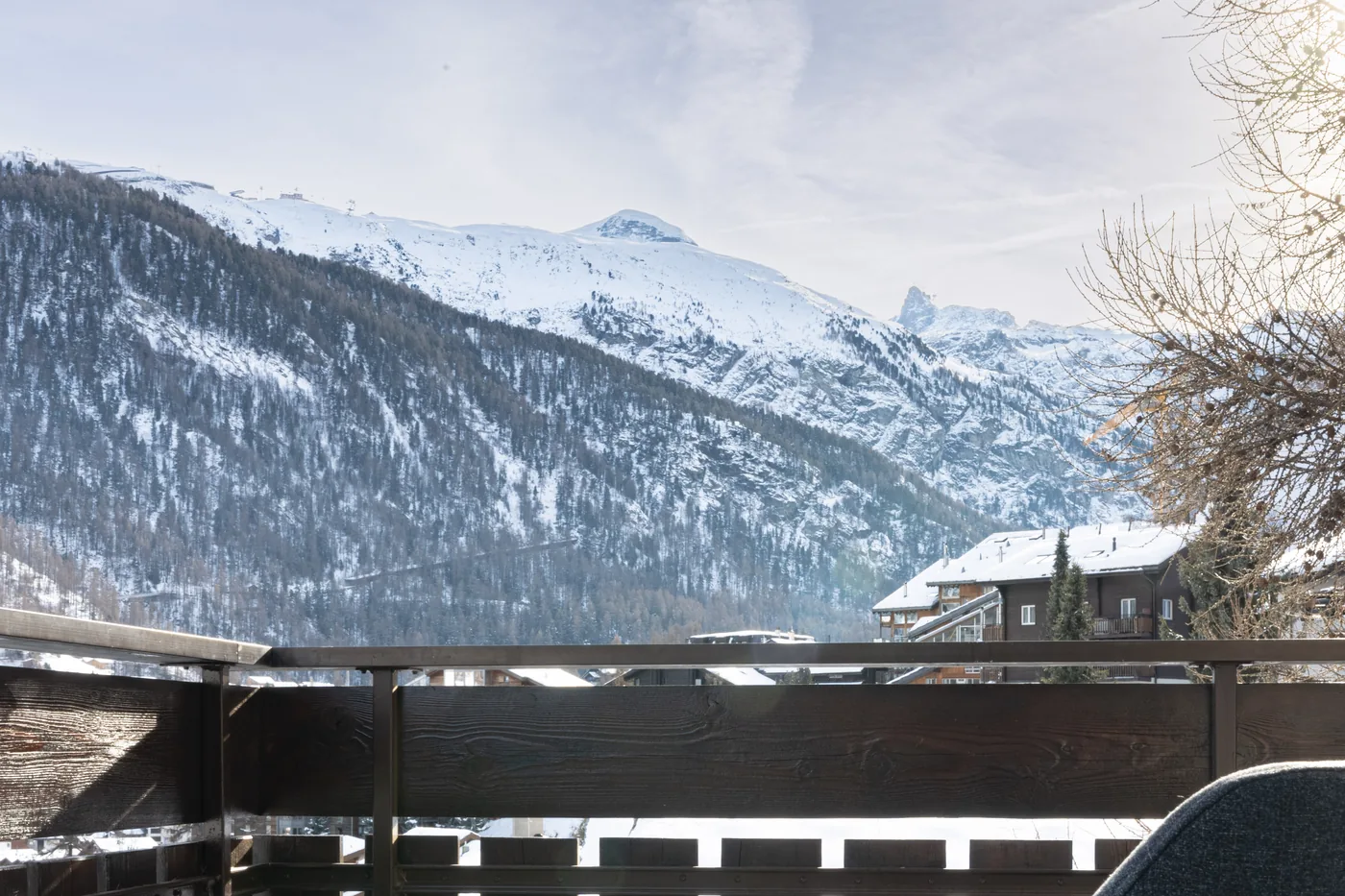
The third driver is view and position. In a village where everyone walks, proximity to the lifts and the centre has measurable value, and a view of the Fee glacier is a decisive visual argument on platforms, where the first photograph decides the click. These are strengths that are paid for at purchase - which is why they should be assessed coolly, against expected yield, rather than on the strength of a viewing on a sunny day.
05Where to buy: reading the village sectors like an operator
The village centre, around Dorfstrasse, is the most liquid sector: shops, restaurants, everything within walking distance, and the density that makes efficient changeovers possible. It is the default choice for an investor seeking consistency rather than a coup, and it is also the sector where a property is easiest to re-let and resell.
The Wildi sector, close to the village entrance and the car parks, answers a different logic: less central, but with the shortest arrival journey and the simplest handling. For an investor that is a real operational argument - and a commercial one with families, who dread precisely the carrying. Properties near the Alpin Express base station play the card of access to the ski area and the glacier, with a price premium in winter and summer alike. The south of the village, towards Spielboden and Längfluh, offers the view of the Fee glacier and proximity to the historic lifts, at the cost of a longer walk from the car parks.
Finally, the Saas Valley widens the field: Saas-Grund, Saas-Almagell and Saas-Balen offer softer entry tickets and vehicle access right to the door, hence simpler operations - but a different, and generally less pressured, short-term demand than in the pedestrian village. The right choice does not depend on a sector's prestige but on the fit between the type of property, the clientele you are targeting, your own use and the logistics you are prepared to take on. An investor who will never occupy the property and an owner who wants to spend February there should not buy in the same place.
06Buying as a non-resident: Lex Koller and condominium rules
If you are not domiciled in Switzerland, Lex Koller governs the acquisition of real estate by persons abroad: depending on your status and on the property, authorisation may be required, cantonal quotas apply, and restrictions on surface area or resale may exist. This is a check to carry out very early, with a notary, because it determines whether the project is feasible at all - and sometimes creates an obligation to let the property.
A second check, particularly important in Saas-Fee: the condominium rules. A large part of the stock consists of apartments in condominium ownership, and some rules restrict short-term letting, the use of the ski room or cellar, and - a point specific to a pedestrian village - the installation of access devices in common areas. A key safe or smart lock at a building entrance is not an individual decision: without it, your autonomous check-in model can be compromised from the outset.
Then there is the question of charges and works. On a stock built up over decades, at 1,800 metres and exposed to demanding winters, renovations to the building envelope, roof, heating or lift are decided in general meetings and passed on to co-owners. In a car-free village those works also cost more than elsewhere, since bringing in materials and teams is constrained. Reading the minutes of the last general meetings before making an offer costs an evening; discovering it after the purchase can cost a season of income.
07From viewing to first booking: how we support you
We step in at two points. Before the purchase, we analyse the property from a rental yield perspective: Lex Weber status, applicable tourist tax regime and notification obligations, condominium constraints - including for the access device - real distance and gradient from the car parks, fit between the layout and the target clientele, and potential across three seasons rather than winter alone. That is the purpose of our purchase support, which stops you discovering after signing that a property cannot be operated the way you imagined.
After the purchase, we take the property under management: compliance and notification to the municipality of Saas-Fee, furnishing and equipment suited to a German-speaking and international clientele, professional photography, creation and distribution of listings with the glacier and the pedestrian village to the fore, dynamic pricing calibrated on three seasons rather than one, access instructions built for a car-free village, cleaning, linen and maintenance. Our commission is 25% of the net amount collected after deduction of platform fees, transaction fees and cleaning - the latter being charged to the guest. It is all described on the page of our Saas-Fee concierge service.
Planning a purchase in Saas-Fee?
Before making an offer, validate the rental potential, the access logistics and the regulatory status of the property. Our free audit gives you the answers within 24h.
Request my free auditFrequently asked questions
Does Lex Weber prevent buying to let in Saas-Fee?
No. Saas-Fee is far above the 20% second-home threshold: construction of new "classic" second homes has been frozen there since 2013. But existing properties with acquired rights can be bought and let freely, including short-term. Some newer properties, on the contrary, carry a tourist accommodation designation that requires them to be let. This status is checked in the land register before signing.
Does the distance between the car park and the property really matter when buying?
Yes, and it is the criterion most specific to Saas-Fee. As the village is car-free, everything that enters and leaves the property - guests, luggage, linen, groceries, cleaning equipment - crosses the distance between the car parks at the entrance to the village and the front door on foot or by electric vehicle. That distance, and above all the gradient, influence guest satisfaction, operating costs and the feasibility of changeovers. It should be measured before you make an offer, not discovered after signing.
Can a foreign buyer acquire a property in Saas-Fee to let it?
It depends on their status and on the property. Lex Koller governs the acquisition of real estate by persons abroad: depending on the case, authorisation is required, cantonal quotas apply and restrictions on surface area or resale may exist. This is a check to carry out very early, with a notary, because it determines whether the project is feasible at all.
What kind of property lets best in Saas-Fee?
Properties that work across several seasons. Saas-Fee is one of the few alpine resorts combining winter, summer skiing on the glacier and an autumn of hiking and mountaineering: a property that only appeals to the February skier leaves part of its potential unused. In practice that means a home well equipped for drying and storing equipment, a real kitchen, straightforward access from the car parks and, ideally, a clear view of the glacier or the peaks.
Going further
Saas-Fee Concierge Service
Full rental management for your property in the Pearl of the Alps.
Regulations in Saas-Fee
Notification to the municipality, Lex Weber and Valais obligations.
Purchase support
Analysis of a property's rental potential before you make an offer.
Tourist tax in Saas-Fee
Seasonal rates, the SaastalCard and declaring overnight stays.
Buying a second home to let it
The complete guide to rental investment in an alpine resort.