
Own a holiday home in Gstaad-Rougemont?
Cleaning services for short-term rentals in Gstaad-Rougemont
High-end chalets, aged timber and fine textiles, guests who return every season: organising hotel-grade housekeeping on both sides of the Saanenland.
Local team on site in Gstaad-Rougemont · Response within 24 hours
01The real issue here is the standard, not the volume
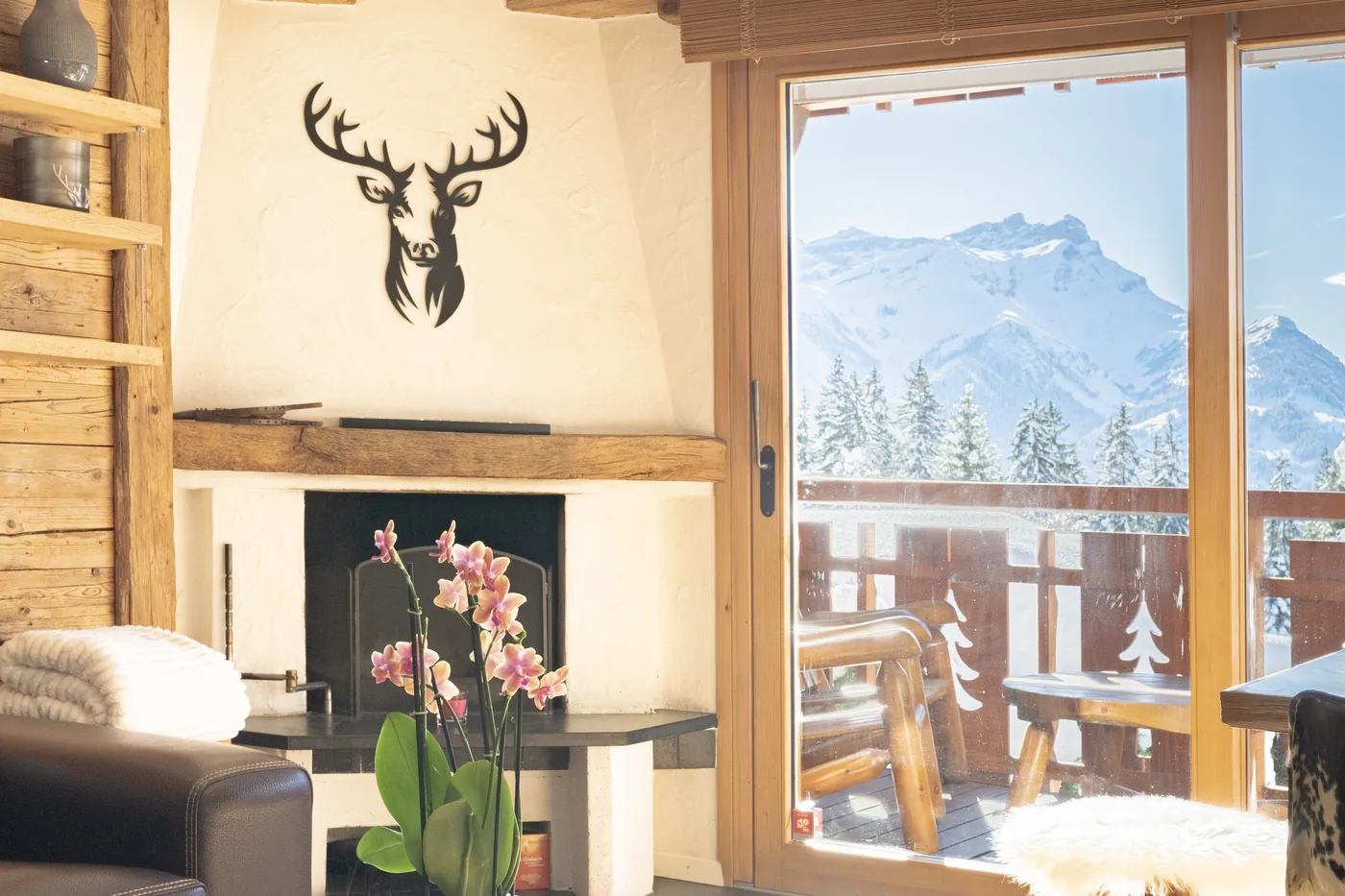
In many resorts, cleaning is first and foremost a question of pace: fitting as many properties as possible into changeover day. In Gstaad-Rougemont the problem lies elsewhere. The Saanenland is a premium market, and the guests who stay here implicitly compare your chalet to a top-end establishment. They will never say "it was reasonably clean": they will notice a badly wiped mirror, a tired shower seal, a fireplace smell that was not aired out, or a crease on a duvet cover. The expected standard is hotel-grade, not domestic, and the margin for error is very narrow.
That expectation has a direct economic consequence, and it weighs more heavily here than elsewhere. The region's clientele is loyal and recurring: many families come back on the same dates every winter, sometimes across generations, and recommend properties to one another within small circles. Losing a family over a failed stay is not losing one booking: it is losing a run of stays over several years, plus every booking that family would have generated by word of mouth. Conversely, impeccable cleanliness with this kind of clientele builds a remarkably stable base of direct bookings.
02Materials that do not forgive improvisation
The traditional architecture of the Saanenland is not stage decoration: it is a daily technical constraint. Aged timber on walls and ceilings, exposed beams, solid wood floors, natural stone in the bathrooms, brass, leather, fine textiles, wool rugs. A universal product wiped onto aged timber marks it permanently; too much water on an oiled floor dulls it; an acidic detergent on limestone etches it for good. That damage is invisible on day one, but it accumulates, and it devalues a property whose worth lies precisely in its finishes.
Then there is equipment rarely found in a standard rental, each requiring its own protocol: a wellness area with sauna, steam room or hot tub, a fireplace or wood-burning stove to empty, clean and restock with logs, a ski room with boot dryers to dry and disinfect, terraces and access paths to clear of snow in winter, and large picture windows whose cleanliness determines the entire perceived value of the view. We build a photographic checklist specific to each property rather than a generic protocol, precisely because no two of these chalets are alike.
03Two seasons, therefore two cleaning regimes
The region lives through two clearly distinct high seasons, and housekeeping is not the same in each. Winter brings melted snow in the entrance halls, damp ski suits, firewood, salt and grit on the floors, condensation on the glazing, and maximum pressure around the year-end holidays, when stays follow one another with very high expectations and the whole valley is looking for extra hands at the same moment. Summer, driven by hiking and by the season of festivals and major sporting and cultural events, brings shorter stays, fine dust, terraces and outdoor furniture to treat, and guests who sometimes come for only two or three nights.
In practice this means two sets of checklists, two consumable stocks, two ways of sizing the team - and planning the peaks well in advance. A self-managing owner usually discovers the problem in mid-December, when looking for a cleaner available on the morning of 27 December for a 10 a.m. departure and a 4 p.m. arrival. We reserve our capacity for those slots far ahead instead, and we always keep a recovery margin.
04Linen: hotel rotation is the only credible set-up
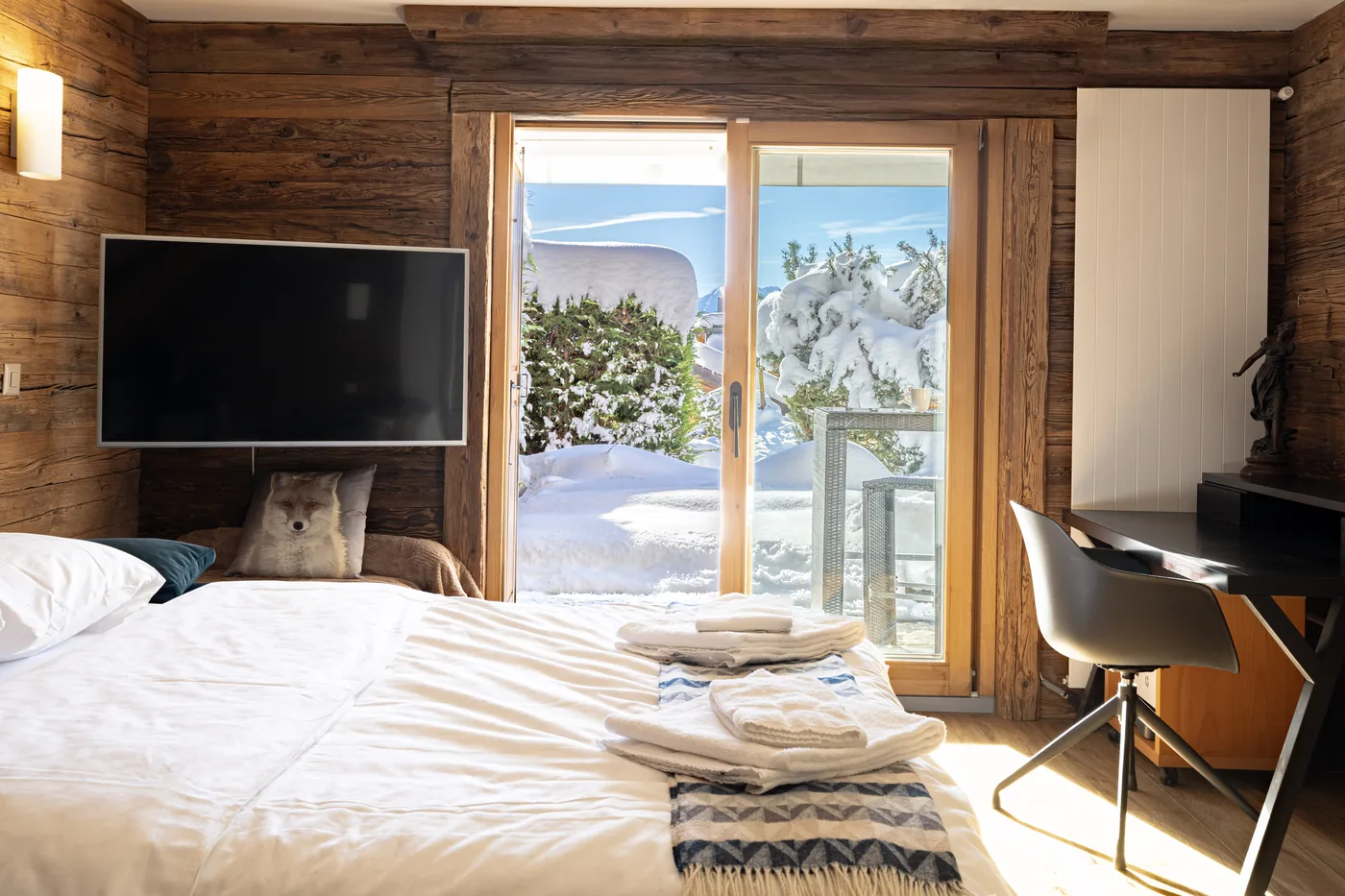
In a chalet with several bedrooms and as many bathrooms, washing linen on site between two stays is a dead end. The number of items runs into the dozens, domestic machines become the bottleneck of the entire day, and the result never reaches the consistency expected by guests used to luxury hotels. The only workable set-up is hotel rotation: several complete sets per property, linen collected dirty and delivered clean, a buffer stock to absorb the unexpected, and a systematic check on the condition of each item before it goes back into service.
Linen quality is in fact one of the few areas where the gap between a decent property and an excellent one is visible immediately, within the first minute spent in the bedroom. In this market, sheets and towels of consistent quality from one stay to the next are not a luxury: they are the minimum expected, and they come up very frequently in reviews. We treat linen as a service in its own right, with a dedicated stock per property rather than a shared pool.
05One valley, two cantons, a single logistical catchment
Administratively, Gstaad-Rougemont is cut in two: the municipality of Saanen belongs to the canton of Bern, Rougemont to the canton of Vaud. Logistically, however, it is a single territory, structured by a road that stays open all year and by the MOB railway line that links the villages. Our rounds are therefore built by sector - Gstaad and the Promenade, Saanen, Schönried and Saanenmöser higher up, Rougemont on the Vaud side - without the cantonal border complicating how the cleaning is organised.
What genuinely changes from one side to the other is the paperwork: declaring nights, tourist taxes, the applicable legal framework. We devote two full pages to those subjects, short-term rental regulations in Gstaad-Rougemont and the tourist tax in Gstaad-Rougemont. For housekeeping, the only practical difference is the working language: German-speaking on the Saanen side, French-speaking in Rougemont. Our teams operate in both.
06Discretion and trust: one more requirement in the Saanenland
There is a dimension here that you do not meet everywhere: discretion. Part of the region's clientele values privacy as much as comfort, and owners themselves expect that neither their identity, nor that of their guests, nor the contents of their chalet will be talked about. That calls for stable, trained, identified teams who return to the same properties rather than a different set of extra hands each week, and for clear rules on photographs, keys and access.
It also calls for serious handling of valuables and of the personal belongings owners leave on site: locked cupboards, an inventory, and immediate, documented reporting of any anomaly. These are details, but they are exactly the ones that let a non-resident owner - who may not set foot in the chalet for three months - sleep soundly.
07How our concierge service organises cleaning in Gstaad-Rougemont
Local teams trained to hotel standards, products suited to fine materials, a photographic checklist specific to each property, a quality check after every clean, restocking of consumables, linen managed in rotation, immediate reporting of any technical issue with photographs, and recovery capacity kept in reserve for seasonal peaks. Cleaning does not work in isolation: it dovetails with guest welcome, described on our page on remote check-in in Gstaad-Rougemont, and with maintenance, within our full rental management service.
For you, the translation is simple: you no longer organise anything from a distance, you no longer hunt for someone at short notice between Christmas and New Year, and you no longer block your calendar for lack of logistics. End-of-stay cleaning is charged to the guest, as on every platform; our 25% commission is calculated on the net amount collected after deduction of platform fees, transaction fees and cleaning.
Hotel-grade housekeeping, without a second thought
Our free audit assesses the potential of your property in Gstaad-Rougemont and sizes the cleaning and linen set-up. Answer within 24 hours.
Request my free auditFrequently asked questions
Is cleaning charged to the owner in Gstaad-Rougemont?
No. End-of-stay cleaning is charged to the guest, as on every platform. It therefore does not eat into your income: it is added to the nightly price and funds the service. Our 25% commission is calculated on the net amount collected after deduction of platform fees, transaction fees and cleaning.
What makes cleaning a Saanenland chalet different?
The level of expectation and the nature of the materials. Guests in Gstaad-Rougemont implicitly compare the experience to a top-end hotel: the expected standard is hotel-grade, not domestic. Add to that large surfaces, aged timber, natural stone, fine textiles, often a wellness area, a fireplace and a ski room - each requiring specific products, techniques and time, and none forgiving improvisation.
Do you manage properties on both sides of the cantonal border?
Yes. Our teams work in Gstaad, Saanen, Schönried and Saanenmöser on the Bern side as well as in Rougemont on the Vaud side. It is a single logistical catchment, linked by road and by the MOB railway, which makes coherent rounds possible. The difference lies in the administrative side, not in how the cleaning is organised: we cover that on our regulations page.
What happens if a guest reports a cleanliness issue?
We intervene the same day. Our team is on site and the valley remains accessible all year round by road and by train. A quality check takes place after every clean, precisely so that this scenario remains exceptional: in a market where guests return every season and recommend properties to one another, a single failed stay is paid for over years.
Further reading
Gstaad-Rougemont concierge service
Premium rental management for your chalet in the Saanenland.
Remote check-in
Key handover, arrivals by MOB train and bilingual guest welcome.
Regulations in Gstaad-Rougemont
Two cantons, two regimes: Saanen (BE) and Rougemont (VD).
Rental management
Cleaning, linen, maintenance and guest welcome in a single offer.
Self-manage or delegate?
The full calculation: time spent and income at stake.